
Skip to content

Bats

Bats are excellent indicators of a healthy, connected and insect-rich environment.  

Bat droppings are dry and crumble easily into fine powder (unlike rodent droppings).

15 of the UK’s 17 breeding bat species are found in Devon.

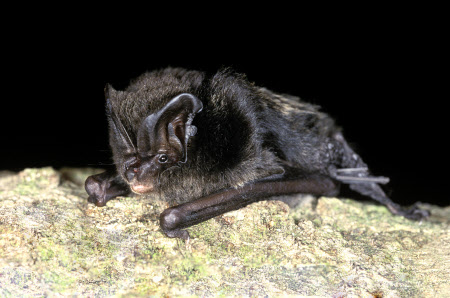
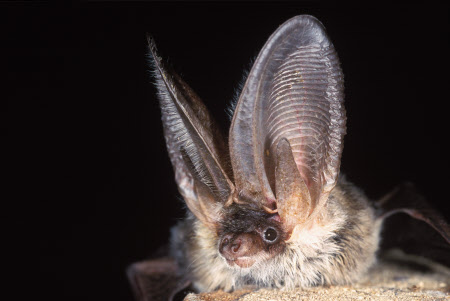
Close view of the head of a Grey long-eared bat (Plecotus austriacus)

Grey long-eared bat, Hugh Clark, BCT – National Trust Images

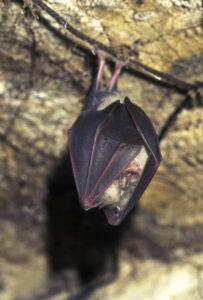
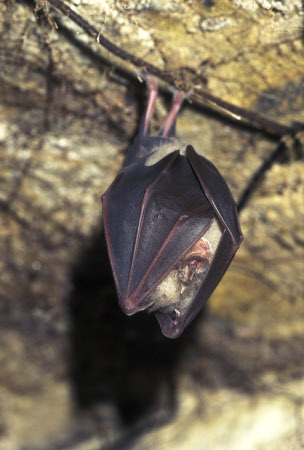
Greater horseshoe bat hanging from above, its wings wrapped around its body

Greater Horseshoe bat, Hugh Clark, National Trust Images

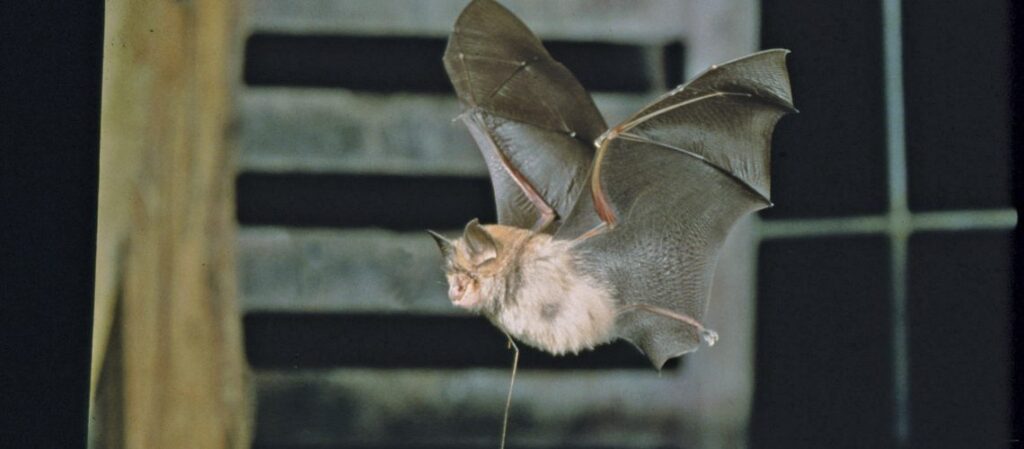
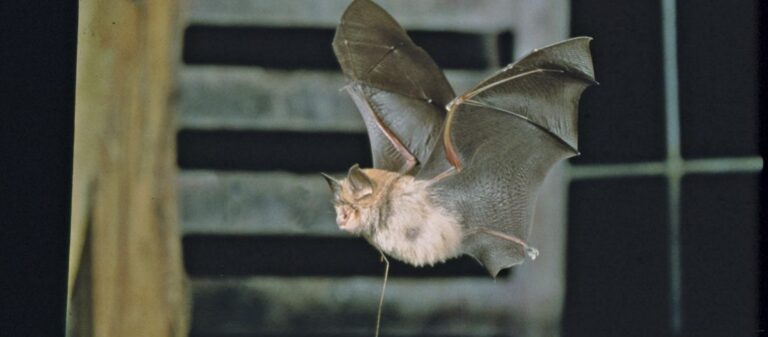
Lesser horseshoe bat mid flight

Lesser horseshoe bat, Frank Greenaway

1. About

Devon’s diverse range of habitats, connected by watercourse and hedgerow corridors, provides excellent habitat for bats. 15 of the UK’s 17 breeding bat species are found here. There is currently no known evidence of Alcathoe Bat or Leisler’s Bat breeding in Devon.

All species need roosts for shelter, insect-rich habitats for feeding and dark linear features, which many bats follow when flying between roosts and feeding areas. See the drop-downs below for more information.

Seven species of bat are listed as Devon Species of Conservation Concern: Lesser Horseshoe Bat, Greater Horseshoe Bat, Bechstein’s Bat, Barbastelle, Serotine, Grey-long Eared Bat and Noctule. All, other than Noctule, are also identified as Devon Special Species that need specific action or attention.

All British bats are are legally protected.

All Devon’s bats need safe, dry roosts where they can rest, feed, sleep, raise their young and hibernate. Roosts can include holes in trees and structures such as caves, mines and buildings. However, different types of roost are used by different species. For example, Bechstein’s Bats and Barbastelle largely roost in trees while Lesser and Greater Horseshoe Bats generally prefer large roof spaces and caves to trees or bat boxes. Many species don’t adapt well to new or changed roosts so it’s vitally important we look after them.

Bats use different roosts for different activities. Summer maternity roosts are the largest as females gather together to give birth and raise their young. Males and non-breeding females often roost alone in summer, although will sometimes share roost spaces, including with other bat species. Many bats tuck themselves into tiny crevices while Horseshoe Bats can be seen hanging upside down. 

All Devon’s bats feed on flying insects and some species, such as the Brown Long-eared Bat and Bechstein’s Bat, can take spiders and other non-flying insects. Natterer’s Bats are able to pluck spiders from their webs! Bats generally feed within a few kilometers of their roosts, although some, such as Barbastelle, will travel further. All need a patchwork landscape with a range of insect-rich habitats that they can use at different times of the year. All insect-rich habitats are important (including wetlands, field margins, species-rich meadows, broadleaved woodlands, wet woodlands, hedgerows, well vegetated watercourse corridors, parks and gardens) but again, some species prefer certain habitats. Daubenton’s Bats are generally seen feeding over water while Bechstein’s Bats largely forage in woodlands.  
 
All bats need their roosts and feeding habitats to be connected by dark linear features such as hedges, woodland edges, rivers and streams. They use echolocation to navigate around the countryside, communicate and hunt for insects.    

Most bats are sensitive to light and avoid lit areas.  However, a few species, particularly Pipistrelles, Noctule and Serotine, are less light sensitive and may opportunistically feed under certain streetlamps, as insects are frequently attracted to the short-wavelength light (UV) some emit. However, this leaves them in danger of predation and peregrine falcons have been recorded hunting bats in our lit cities.
Key pressures and opportunities

The main issues for bats are loss or deterioration of roosts, lack of insects, lack of connectivity and lighting. For example, recent research by the Butterfly Conservation Trust, Rothamsted Research and the UK Centre for Ecology & Hydrology published in 2021 has revealed a 33% decline in the populations of larger moths in the UK over the last 50 years

Specific issues relating to Devon Special Species are discussed below.

2. What we need to do and where

Priority

Increase the abundance and distribution of bats across Devon, particularly those identified as Devon Special Species.

See Find out more below for links to detailed guidance and sources of funding and advice.

Devon Special Species

Greater horseshoe bat hanging from above, its wings wrapped around its body

Greater Horseshoe Bat 

Rhinolophus ferrumequinum

Horseshoe bats

Greater and Lesser Horseshoe Bats are named for the horseshoe-shaped fold of skin around their nostrils, known as a nose leaf (Rhinolophus is Greek for nose crest). This boosts the weak sound waves they emit to navigate, communicate and find food.

Size: Greater Horseshoe Bats are a large bat, around the size of a pear. Lesser Horseshoe Bats are one of the UK’s smallest bats, around the size of a plum.

Roosts: In summer both species roost in warm attics, roof spaces, slate-roofed barns and sometimes cellars or boiler rooms. In winter they hibernate in cellars, caves and mines, where temperatures are stable and humidity is high. Both hang upside down in roosts (rather than tucking themselves into crevices) with their wings wrapped around their bodies. Neither species will generally roost in bat boxes or trees. They can be identified by their droppings which have a distinctive pinch in the middle.

Flight: Both species have weak echolocation calls and so generally stay within 5 m of linear features (so that their calls can bounce back) to navigate around the countryside. This means that they’re low flying and more vulnerable to road collisions than higher flying bats such as Serotines and Noctules.

Lighting: Both species are very light sensitive and avoid lit areas.

Foraging habitat:

Greater Horseshoe Bats feed on different insects at different times of year. In the spring females feed over pastures eating beetles such as Cockchafers and dung beetles (which live on cow pats). In the summer, bats and their young feed mainly on moths although later in the season craneflies form a key part of their diet. While cattle-grazed pastures are important, the bats also feed in woodlands, wetlands and along hedge corridors and watercourses – anywhere that’s insect-rich.

Adults generally forage within 4 km of maternity roosts while juveniles hunt within around 1 km and are very dependent on grazed pasture. Greater Horseshoe Bats generally forage around 2 km from their winter roosts.

Population:

The Greater Horseshoe Bat is rare in the UK and confined to south-west England and south Wales. It’s estimated that the population declined by over 90% in the last 100 years. Reasons for the decline are thought to be disturbance to roosts, loss of permanent pastures and lack of insects. Numbers are now increasing but from very low levels.

Devon holds a third of the UK’s Greater Horseshoe Bat population and many of the larger maternity and hibernation roosts have been designated as SSSIs or SAC (South Hams and Beer Quarry and Caves SAC). However, there are a number of large roosts in caves and mines which are not designated. 

Lesser horseshoe bat mid flight

Lesser Horseshoe Bat

Rhinolophus hipposideros

Horseshoe bats

See Greater Horseshoe Bat above for information on both species, including roosts.

Foraging habitat

Lesser Horseshoe Bats have very similar foraging needs as Greater Horseshoes and dung fauna are an important food source for both species. However, Lessers feed on smaller insects (flies, bees, wasps, lacewings and small moths) and have a stronger association with woodland, wet woodland, parkland, scrub and sheltered valleys.

Lesser Horseshoe Bats are weaker flying than Greaters and generally forage within 2.5 km of summer roosts and 1.2 km of hibernation roosts.

Population

The Lesser Horseshoe Bat is rare in the UK and confined to Wales and western England. The population in England is considered to have increased in the long term (since 1999), but there’s evidence to suggest it’s declined in the short term (since 2018). The population remains vulnerable. Pressures include lighting, changes in connectivity, loss of roosts and a declining insect population.   

Devon is a national stronghold for Lesser Horseshoe Bats, and we have over 30 large maternity roosts. These are found across the county other than on the exposed uplands of Dartmoor and Exmoor. We have a national responsibility to ensure that the population remains robust.

Close view of the head of a Grey long-eared bat (Plecotus austriacus)

Grey Long-eared Bat

Plecotus austriacus

Habitat

This species roosts in crevices in roof spaces in a range of buildings including houses, churches and barns. They usually roost inside the ridge tiles or against the ridge board. Maternity roosts are often in pre-Victorian or Victorian buildings, with large loft spaces. Open-fronted barns form part of their network of day and night roosts. They have never been recorded using bat boxes.

Grey Long-eared bats feed largely on flies and moths (especially the Large Yellow Underwing, one of our most abundant large moths that feeds on a range of plants and grasses) in grasslands and wetlands (marshes, ponds, watercourses). They also feed in broadleaved woodland in periods of colder, wetter weather. They largely forage within 5 kms of maternity roosts and unlike some species will feed in the middle of meadows as well as around the edges.

Like Horseshoe bats, they are very light sensitive.

Population

The Grey Long-eared Bat is the UK’s rarest bat species with a population of around only 1,000 animals and declining. The UK population is thought to be below the minimum size needed to ensure survival and it’s therefore classed as ‘endangered’ and at very high risk of extinction.

Maternity roosts are currently only known in Devon, Dorset and the Isle of Wight. Half of the known maternity roosts are in Devon, most within 5 km of the coast in south and east Devon. Devon has a special responsibility for Grey Long-eared Bats, and they are listed as a Devon Special Species.

Grey Long-eared Bats can be confused with the much more widespread and numerous Brown Long-eared Bat, which looks very similar and can occupy the same roost. It’s therefore critical that DNA testing of droppings in roosts is carried out to identify which species is present. See Find out more below for a link to guidance. 

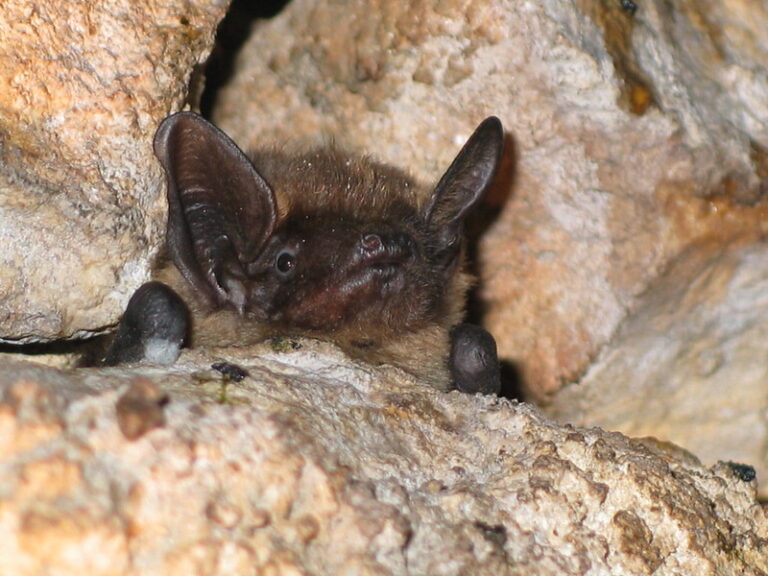
A bat face in between some rocks.

Serotine

Eptesicus serotinus

Habitat

Serotines mainly roost in crevices in buildings, often older buildings. They have large oval droppings that are often found around chimney bases or at gable ends of roof spaces. Hibernating Serotines have been found inside cavity walls and in disused chimneys, and it’s possible that they stay in the buildings they use in the summer for some of the winter.  

They feed on a range of larger insects including beetles, flies and moths. They generally feed within 3 km of roosts in a range of open insect-rich habitats such as parklands and wood pasture, traditional orchards and pastures, but will also use tree lines, woodland edges and tree-lined watercourses. 

Serotines are one of the largest bats in Britain and are strong fliers. They can be seen feeding around treetops in parks, gardens and other habitats as they often emerge when it’s still light. They’re less sensitive to lighting than other species such as Horseshoes and may be seen foraging around streetlights. However, they can still be negatively affected by lighting as it can change their behaviour and increase their risk of predation.

Population

Serotines are found in southern England and Wales. The population appears to be stable but is classed as vulnerable to extinction and monitoring by the Bat Conservation Trust has shown that they may be declining (see links in Find out more below).  While they’re widespread across Devon, there’s little information about their maternity roosts.

Actions for Horseshoes, Grey Long-eared Bats and Serotines

Manage and create a landscape with bat roosts in buildings and other structures, and networks of dark insect-rich habitats to provide flight lines and foraging habitats.

  • Roosts: Look after existing roosts and create new ones, particularly large roof spaces, slate-roofed barns, boiler rooms, caves and adding crevices into structures for Serotines.
  • Foraging habitat: Manage and create a network of dark, connected, insect-rich habitats (such as meadows, woodlands and wetlands) to provide foraging habitat. Cattle-grazed pastures with dung beetles are particularly important for Horseshoe Bats and flower-rich grasslands for Grey Long-eared Bats.
  • Flight lines: Manage and create a network of dark flight lines connecting roosts and foraging habitats, especially hedge corridors, woodland edges and watercourse corridors.
  • Insects: Minimise the use of, and target applications of, pesticides and avermectins to reduce impacts on insects.
  • Reduce light pollution. Avoid light spill onto roosts and habitats used by bats (such as hedgerows, watercourse corridors, woodlands, parks and meadows). Light spill should be a maximum of 0.5 lux, which is similar to a full moon on a clear night. Use warm amber lighting.
  • Always carry out DNA testing of droppings in a long-eared bat roost to clarify whether the more common Brown Long-eared Bat or rare Grey Long-eared Bat is present. See Find out more below for a link to guidance.
  • Be aware of legislative requirements and Devon Planning Guidance.

Where to focus actions

High Opportunity Areas: All are important for bats, other than the highest areas of Dartmoor and Exmoor.

Species Opportunity Areas are mapped to show where actions are particularly needed for Greater Horseshoe Bats and Grey Long-eared Bats. These include:

  • Landscape connectivity zones (the landscape connecting sustenance zone) – all actions but particularly relating to dark flight lines.
  • Sustenance zones (areas where bats are most likely to feed around large roosts) – all actions. Cattle-grazed pastures are especially important in Horseshoe sustenance zones and flower-rich grasslands in Grey Long-eared Bat sustenance zones.

B

Barbastelle

Barbastella barbastellus

Habitat

Barbastelles roost in crevices in broadleaved woodland trees, often under loose bark, in cracks or deep inside hollow trees during cold weather. They prefer woods with a dense understorey, which helps to maintain humid roost conditions, and that form part of a network of woods in a landscape. Barbastelles are very light sensitive.

During the summer, female bats move their maternity roosts (generally 10-20 bats) between trees to maintain optimum temperature and humidity. Non-maternity roosts can also be found in old buildings where the bats use crevice features that replicate their tree roosts.

While Barbastelles mainly forage in woodlands, they also use other insect-rich habitats such as meadows (especially wet grasslands and mires), ponds and watercourses. They’re specialist moth hunters but eat other insects such as lacewings, caddis flies and small beetles. Female Barbastelles return to the same foraging areas on successive nights. Researchers have tracked them travelling to forage over distances from 6.8 km to more than 15 km.

Population

Barbastelles are largely found in southern England and Wales. The population has declined by 99% over the last 500 years and they are a threatened species.  

Barbastelles are recorded across Devon and are commonly picked up in bat surveys, but in low numbers. A number of maternity roosts have been found on the edges of Dartmoor and between Meeth and Merton in Torridge. There are concentrations of records around east Dartmoor and the coast around Braunton and Bideford. However, there are likely to be roosts in woodlands across Devon that have not been recorded. The Exmoor and Quantocks Oakwoods SAC is partially designated for Barbastelles.

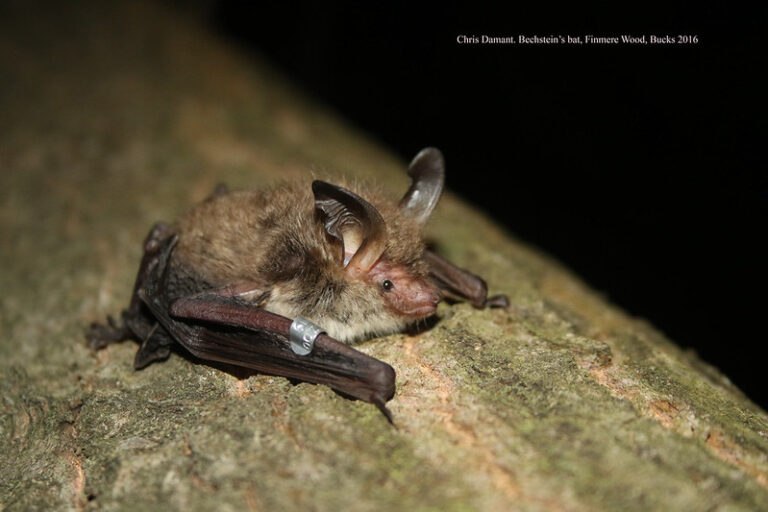
A small Bechstein bat clings to a tree and has a small silver ring on one of its wings.

Bechstein’s Bat

Myotis bechsteinii

Habitat

Bechstein’s Bats are thought to prefer roosting and foraging in large, mature native woodlands where they nest in holes (such as old woodpecker holes) and cavities in trees. However, they’ve also been found roosting in small copses and in trees in hedges and tree-lines. Males are often found in younger woodland. They prefer woodlands with 50% understorey cover of native species, especially hazel and hawthorn. As for most bat species, little is know about what adult females and juvenile bats do after maternity colonies disperse.

Like Barbastelles, Bechstein’s Bats switch roosts regularly during the summer to find optimum conditions. They hibernate in caves but are likely to also use hollow trees. 

They generally feed in woodlands within 3 km of maternity roosts and mainly eat moths, beetles, craneflies, lacewings and spiders.

Population

Bechstein’s Bats are one of the UK’s rarest bats, confined to southern England with a stronghold in Dorset. There are only two known small populations in Devon. However, they have a very quiet call and are difficult to detect. Beer Quarry and Caves support a few hibernating Bechstein’s Bats, and this is one of the reasons for its designation as a SSSI and SAC. They have been radio-tracked from the caves to maternity roosts around Shute. The only other known roost is near Newton Abbot.

Actions for Barbastelles and Bechstein’s Bat

Manage and create a landscape with networks of dark insect-rich habitats (particularly woodlands) with ancient and veteran trees, to provide roosts, flight lines and foraging habitats.

  • Woodlands: Manage woodlands to ensure that there are always some areas with a closed canopy and dense understorey creating dark, humid conditions. Avoid carrying out works that will cause sudden changes in light levels or humidity. Create a network of woodlands, including wet woodlands, across landscapes. See Broadleaved woodlands and Wet woodlands for more actions.
  • Ancient and veteran trees: Always survey for bats before carrying out any work to trees in woodlands and ensure that bats aren’t affected. Aim to safeguard any trees that could be suitable for Barbastelles (with loose bark, cracks, hollows) or Bechstein’s Bats (holes).
  • Follow best practice guidance to maximise the wildlife value of ancient and veteran trees in woodlands, including leaving deadwood and where needed carrying out veteranisation to create roosting feature. See the Ancient trees, veteran trees and deadwood page for more actions.
  • Expert advice. Obtain advice from an expert if there is any likelihood of Barbastelles or Bechstein’s Bats being present, and to manage woodlands for these species.
  • Other foraging habitats: Manage and create a network of dark, connected, insect-rich habitats to provide foraging habitat for Barbastelles. See the Habitats pages for more actions.
  • Flight lines: Manage and create a network of dark flight lines connecting woodlands and other foraging habitats, especially hedge corridors, woodland edges and watercourse corridors. See the Habitats pages for more actions.
  • Insects: Minimise the use of, and target applications of, pesticides and avermectins to reduce impacts on insects.
  • Reduce light pollution. Avoid light spill onto woodlands and all other habitats potentially used by Barbastelles (such as hedgerows, watercourse corridors, woodlands, parks and meadows). Light spill should be a maximum of 0.5 lux, which is similar to a full moon on a clear night. Use warm amber lighting.
  • Be aware of legislative requirements and Devon Planning Guidance.

Where to focus action for Barbastelles and Bechstein’s

High Opportunity Areas: All woody mosaic opportunity areas other than the exposed uplands.

Species Opportunity Areas are mapped to show where actions are particularly needed for Bechstein’s Bats. These include:

  • Landscape connectivity zone (the landscape between roosts) – all actions but particularly relating to the creation of a network of continuous woodlands (or woody habitats).
  • Sustenance zones (shows critical foraging habitat around main roosts) – all actions, particularly relating to tree roosts, woodlands and lighting.

Actions for all bats

Habitat management and creation

Bats are found in most habitats across Devon and will benefit from the generic actions set out on the Habitats pages. Anyone managing habitats with rare bats should be aware of their needs.

Research, survey, collaboration and awareness

  • Secure funding for more surveys and research into the location and needs of Devon’s rare bats, particularly Greater Horseshoe Bats, Bechstein’s Bats and Barbastelles. 
  • Share records with the Devon Bat Group and Devon Biodiversity Records Centre
  • Join and support the Devon Bat Group.

3. Inspiration

Case studies

The Bat Conservation Trust’s new Connecting People and Landscapes project is working with landowners and local communities in south and east Devon to restore habitats for wildlife including Lesser Horseshoe Bats and Grey Long-eared Bats. This work continues work on Grey Long-eared Bats undertaken in Devon as part of the national Back from the Brink Project.   

The Devon Greater Horseshoe Bat Project was a five year partnership project led by Devon Wildlife Trust and funded by the National Lottery Heritage Fund. The team worked with local communities and land owners to carry out surveys and habitat management for Greater Horseshoe Bats.

Reducing street lighting impacts. Devon County Council is working to reduce light pollution through its dimming and switch off policies. There are a number of communities in Greater Horseshoe Bat sustenance zones, such as Chudleigh, where changed to lighting have been made through liaison with local communities,

Greater horseshoe bat hanging from above, its wings wrapped around its body

Where to visit

Always follow the Countryside Code and keep to footpaths and sites that are managed for public access. 

The best way to see and learn more about bats is to go on a bat walk organised by the Devon Bat Group, Devon Wildlife Trust, Seaton Wetlands or others.   

You can see Lesser Horseshoe Bats at Arlington Court (National Trust) in north Devon, where they have a camera in a roost.

A small Bechstein bat clings to a tree and has a small silver ring on one of its wings.

4. Find out more

More detailed information on bats including ecological requirements and details of population trends from the National Bat Monitoring Programme can be found on the Bat Conservation Trust website.

Join the Devon Bat Group

Contact the Devon Bat Group and the Devon Biodiversity Records Centre for bat data.

Devon planning guidance for bats can be found on the Devon County Council website at Wildlife and geology planning guidance – Environment. Guidance documents include more details on the ecology of the bats and useful references.

  • The South Hams SAC Greater Horseshoe Bat Guidance
  • Beer Quarry and Caves SAC Guidance (Lesser Horseshoes, Greater Horseshoes and Bechstein’s)
  • Greater Horseshoe Bat Ecology and Habitat Management
  • Grey Long-eared Bat Guidance
  • Dark Corridors Guidance

The Bat Conservation Trust has produced a useful Guide to identifying long-eared bats as part of their work on Grey Long-eared bats.

Devon LNP Dark Skies pages on the LNP website.

Devon Dark Corridors Guidance part of Devon County Council’s wildlife and geology planning guidance.

The Bat Conservation Trust produces guidance on lighting.  Lighting – Threats to bats – Bat Conservation Trust including a guidance note – Guidance Note 08/23, Bats and artificial lighting at night, Bat Conservation Trust (BCT) and Institution of Lighting Professionals (ILP), 2023 on the Bat Conservation Trust website.

  • Grey Long-eared Bat, Hugh Clark, BCT – National Trust Images
  • Greater Horseshoe Bat – Hugh Clark, National Trust Images
  • Lesser Horseshoe Bat – Frank Greenaway
  • Greater Horseshoe Bat – Hugh Clark, National Trust Images
  • Lesser Horseshoe Bat – Frank Greenaway
  • Grey Long-eared Bat – Hugh Clark, BCT – National Trust Images
  • Serotine bat – Sandor Boldogh
  • Barbastelle bat – Hugh Clark, BCT – National Trust Images
  • Bechstein’s Bat – Chris Damant
  • Greater Horseshoe Bat – Hugh Clark, National Trust Images
  • Bechstein’s Bat – Chris Damant

Draft